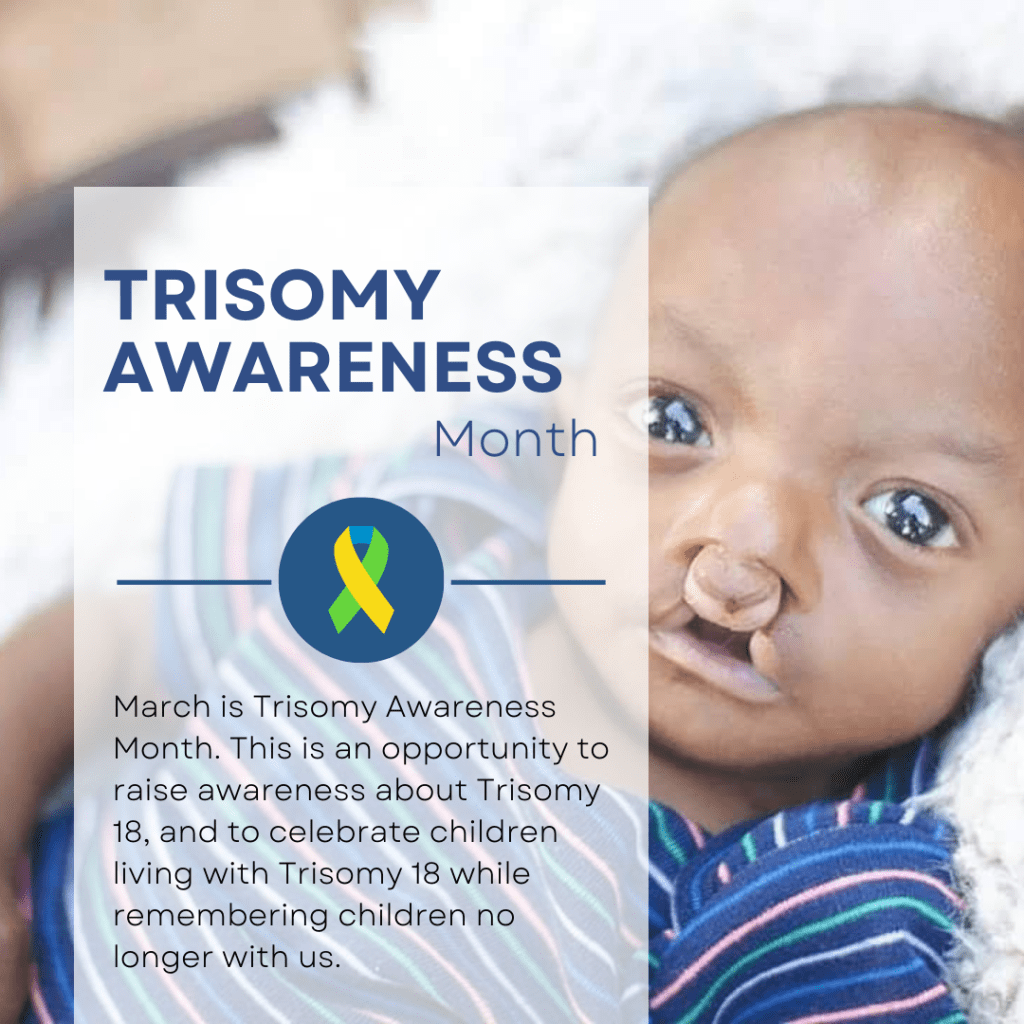
March is Trisomy Awareness Month
March—being the 3rd month of the year—symbolically represents trisomy conditions, which occur when an individual has three copies of a chromosome instead of the typical two. The human body has 23 pairs of chromosomes, totaling 46. In a trisomy condition, an extra copy results in 47 chromosomes. This genetic difference can lead to a variety of developmental and health challenges. While some trisomy conditions result in live births, many lead to miscarriage, often in the first trimester.
Throughout March, specific days are set aside to highlight particular trisomy conditions:
- March 13 – Trisomy 13 (Patau syndrome)
- March 18 – Trisomy 18 (Edwards syndrome)
- March 21 – Trisomy 21 (Down syndrome)
These observances raise awareness about the unique experiences, needs, and resilience of individuals with trisomy conditions, their families, and the professionals who serve them.
Our Focus: Trisomy 18 (Edwards Syndrome)
At the E.WE Foundation, Trisomy Awareness Month is a time to spotlight Trisomy 18—also known as Edwards syndrome. Too often, this condition is labeled “incompatible with life,” a harmful phrase that can lead to medical discrimination, denial of treatment, and systemic barriers to care.
We use this month to:
- Advocate for equitable access to healthcare, diagnostics, and early intervention.
- Provide resources and education for families navigating the journey of Trisomy 18.
- Equip healthcare professionals with tools, training, and guidance to better support patients and families.
- Celebrate the lives of children living with Trisomy 18 and their families.
- Honor and remember the children who are no longer with us.
How You Can Help
Your support helps us make a lasting impact on both families and the professionals who care for them.
- Share Our Mission – Use your voice on social media to raise awareness. Tag us and use #EveryoneIsWe #TrisomyAwareness #Trisomy18.
- Educate Others – Start conversations with friends, colleagues, and healthcare professionals about the realities of Trisomy 18.
- Donate – 100% of your contribution goes directly toward advocacy, education, professional training, and family support programs.
Be part of a movement that champions hope, equity, and informed care.
 The E.WE Foundation